
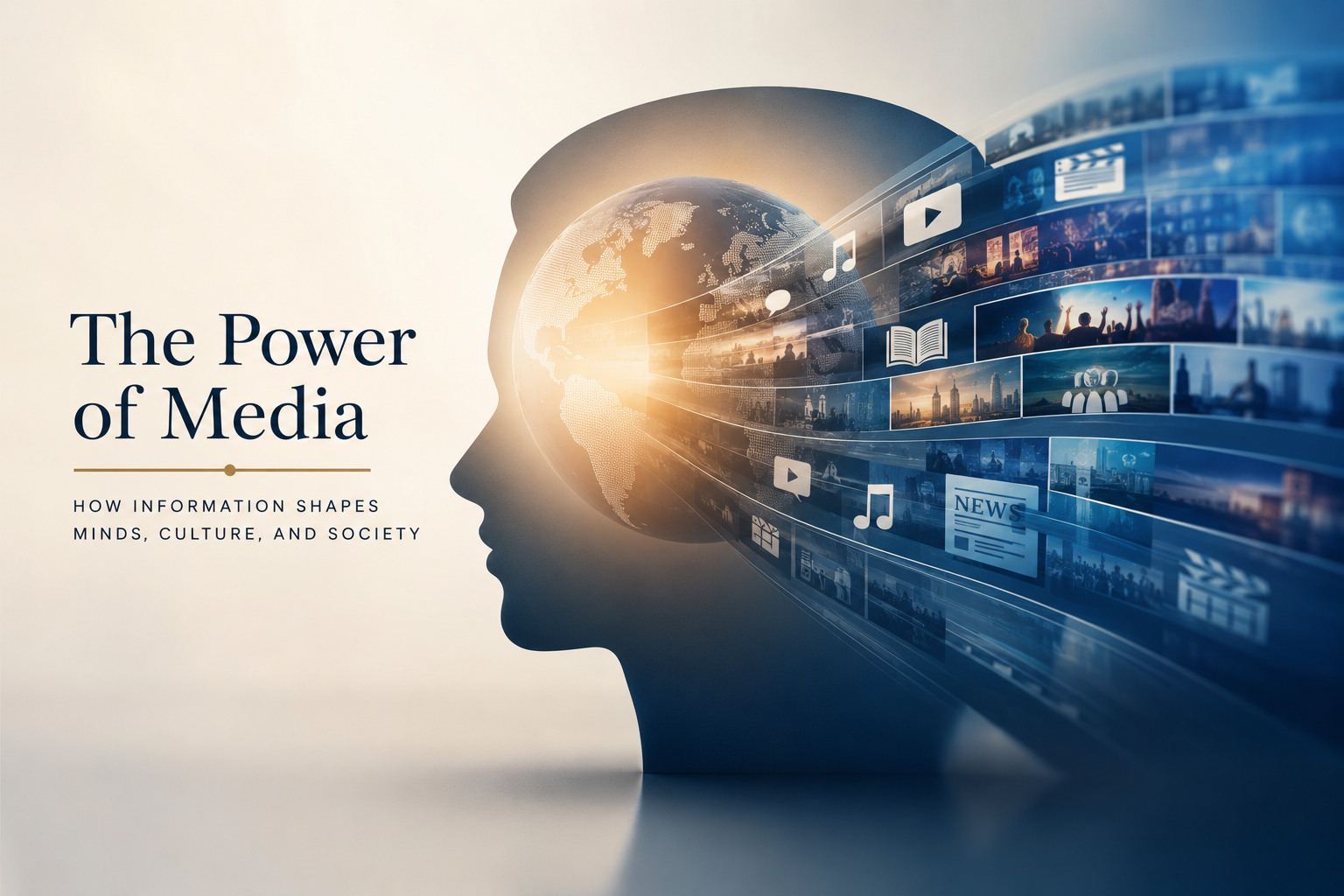
Throughout history, one truth has remained remarkably consistent: the power of media cannever be over-emphasized.
Long before the rise of social media, streaming platforms, and the modern digital ecosystem, historian and educator Carter G. Woodson recognised the profound influence of ideas and education on human behaviour. In Thttps://books.google.com/books/about/The_Mis_Education_of_the_Negro.html?id=t00AoQEACAAJ&utm_source=chatgpt.comhe Mis-Education of the Negro, he wrote:
“When you control a man’s thinking, you do not have to worry about his actions.”
His point was simple but profound: ideas influence beliefs, beliefs influence behaviour, and behaviour shapes culture.
Those who shape ideas often shape societies.
This principle helps explain why media has become one of the most powerful forces in the modern world.
Media Does More Than Entertain
Many people think of media simply as entertainment, but that is far from the truth.
In reality, media also educates, persuades, informs, and influences.
Every day we consume messages through:
- Television
- Films
- Music
- Books
- Podcasts
- News outlets
- Social media
- Advertising
- Online videos
These messages do more than provide information. Over time, they influence how we think about success, identity, family, relationships, morality, purpose, and even God. For this reason, media is never entirely neutral, it helps shape the worldview through which people interpret life.
What We Repeatedly Consume Shapes Us
The Bible recognises the influence of our inner thought life.
Proverbs teaches:
“For as he thinks within himself, so he is.” (Proverbs 23:7, NASB)
Likewise, Paul encourages believers to dwell on whatever is true, honourable, just, pure, lovely, and commendable (Philippians 4:8).
Repeated exposure matters. The ideas we continually hear and see often become the ideas we begin to accept, and those accepted ideas gradually influence our attitudes, decisions, and habits.
Media Shapes Culture
Every generation has been influenced by the stories it consumes.
Films shape imagination.
Music influences emotion.
Books introduce new ideas.
Social media amplifies trends at unprecedented speed.
Many people can look back on their youth and recognise how popular culture influenced their fashion, language, ambitions, friendships, and understanding of success.
Media may not determine every decision we make, but it undeniably contributes to the cultural environment in which those decisions are formed.
The Importance of Discernment
Because media carries influence, Christians are called to approach it with discernment rather than passivity.
Not every message reflects biblical truth.
Some promote values that encourage compassion, justice, creativity, and human dignity, while others may celebrate greed, violence, selfishness, deception, or destructive lifestyles.
Discernment involves evaluating every message in the light of God’s Word rather than accepting ideas uncritically.
The Spiritual Dimension of Influence
The Bible teaches that there is also a spiritual dimension to the battle for human hearts and minds.
Paul writes:
“For our struggle is not against flesh and blood…” (Ephesians 6:12)
Elsewhere, he describes how unbelief can prevent people from recognising the truth of the gospel (2 Corinthians 4:3–4).
From a Christian perspective, this reminds us that the battle for ideas is not merely intellectual, it is also spiritual.
Prayer, faithful teaching, and the work of the Holy Spirit all play essential roles in helping people understand and embrace God’s truth.
Christians Should Shape Culture, Not Only Criticise It
It is easy to complain about negative messages in modern media, but a more constructive response is to create better alternatives.
Throughout history, Christians have contributed to education, literature, journalism, music, filmmaking, broadcasting, and publishing. These creative fields provide opportunities to communicate truth, hope, beauty, and wisdom.
Rather than withdrawing from the media landscape, believers can seek to influence it through excellence, integrity, and creativity.
Why Christian Media Matters
Healthy media can strengthen families.
It can educate children.
It can encourage ethical leadership.
It can inspire generosity.
It can communicate the hope of the gospel.
In a digital age where billions of people consume content every day, Christian communicators have unprecedented opportunities to serve society through thoughtful, truthful, and life-giving content.
Whether through articles, books, podcasts, films, documentaries, social media, or educational platforms, every message has the potential to shape lives.
Building Influence Requires Both Wisdom and Stewardship
Producing high-quality media requires more than good intentions, it requires wisdom, creativity, skill, collaboration, and responsible stewardship of resources.
Jesus encouraged His followers to be “wise as serpents and innocent as doves” (Matthew 10:16).
That wisdom includes understanding communication, technology, storytelling, and the ethical use of modern media.
When these gifts are placed under God’s direction, they become powerful tools for serving people and pointing them toward truth.
Final Thoughts
Media is one of the defining influences of our generation. It shapes conversations, informs beliefs, and contributes to the culture in which we live.
Because ideas shape lives, Christians are called to engage media thoughtfully, discerning truth from error and creating content that reflects God’s character.
The goal is not simply to consume media wisely, it is also to become faithful communicators who use every available platform to share truth, inspire hope, and contribute positively to society.
When truth is communicated with wisdom, creativity, and love, media becomes more than a source of information, it becomes a powerful instrument for transformation.
Key Bible Passages
- Proverbs 23:7: As a man thinks in his heart, so is he.
- Philippians 4:8: Whatever is true, whatever is honorable, whatever is just, whatever is pure, whatever is lovely, whatever is commendable, if there is any excellence, if there is anything worthy of praise, think about these things.”
- Romans 12:2: “Do not be conformed to this world, but be transformed by the renewal of your mind, that by testing you may discern what is the will of God, what is good and acceptable and perfect.”
- 2 Corinthians 4:3–6: “But even if our gospel is veiled, it is veiled to those who are perishing, whose minds the god of this age has blinded, who do not believe, lest the light of the gospel of the glory of Christ, who is the image of God, should shine on them. For we do not preach ourselves, but Christ Jesus the Lord, and ourselves your bondservants for Jesus’ sake. For it is the God who commanded light to shine out of darkness, who has shone in our hearts to give the light of the knowledge of the glory of God in the face of Jesus Christ.”
- Matthew 5:13–16: “You are the salt of the earth; but if the salt loses its flavor, how shall it be seasoned? It is then good for nothing but to be thrown out and trampled underfoot by men. You are the light of the world. A city that is set on a hill cannot be hidden. Nor do they light a lamp and put it under a basket, but on a lampstand, and it gives light to all who are in the house. Let your light so shine before men, that they may see your good works and glorify your Father in heaven.”
- Matthew 10:16: “Behold, I send you out as sheep in the midst of wolves. Therefore be wise as serpents and harmless as doves.”
- Colossians 4:5–6: “Walk in wisdom toward those who are outside, redeeming the time. Let your speech always be with grace, seasoned with salt, that you may know how you ought to answer each one.”
Frequently Asked Questions
1. What is the power of media?
The power of media lies in its ability to communicate ideas at scale. Media can inform, educate, persuade, entertain, and influence how people understand themselves, others, and the world around them.
2. How does media influence the way people think?
Repeated exposure to ideas, narratives, images, and messages can gradually influence beliefs, attitudes, values, and assumptions. What we consistently consume can become part of the mental framework through which we interpret life.
3. Does media really shape culture?
Yes. Media contributes significantly to the formation and spread of cultural norms, language, fashion, values, aspirations, and social attitudes. It does not control every individual decision, but it helps create the cultural environment in which those decisions are made.
4. Is media always harmful?
No. Media itself is a communication tool. Its impact depends largely on the message being communicated, the intention behind it, and how it is consumed. Media can promote truth, education, creativity, compassion, justice, and human dignity just as it can promote destructive values.
5. Why should Christians be concerned about media?
Christians should be concerned because media communicates ideas that can influence beliefs and behaviour. Scripture calls believers to discernment and to evaluate what they encounter rather than accepting every message uncritically (Romans 12:2; Philippians 4:8).
6. How should Christians respond to negative media?
Rather than simply complaining about harmful content, Christians should respond with discernment, prayer, biblical truth, and constructive creativity. Believers can also create excellent alternatives that communicate truth, wisdom, beauty, hope, and the Gospel.
7. What does the Bible say about the influence of our thoughts?
Scripture places considerable emphasis on the inner thought life. Proverbs 23:7 highlights the relationship between a person’s thoughts and life, while Philippians 4:8 instructs believers to deliberately focus their minds on things that are true, honourable, just, pure, lovely, and commendable.
8. Can Christian media actually influence society?
Absolutely. Christian media can educate, inspire, challenge, encourage, and introduce biblical perspectives into public conversations. Through articles, books, films, podcasts, social media, journalism, and other platforms, Christians can contribute meaningfully to society.
9. What is the spiritual dimension of media influence?
From a Christian perspective, the battle for human understanding is not merely intellectual or cultural. Scripture also presents a spiritual dimension to the struggle over truth and deception (Ephesians 6:12; 2 Corinthians 4:3–6). This makes prayer, sound teaching, and dependence on the Holy Spirit essential.
10. How can I become a more discerning media consumer?
Ask questions such as: What is this message teaching? What worldview does it promote? What values does it normalise? Is it consistent with Scripture? What effect is it having on my thinking and desires? Discernment means learning to evaluate messages rather than merely absorbing them.
11. Should Christians withdraw from modern media?
Not necessarily. Jesus called His followers to be the salt of the earth and light of the world (Matthew 5:13–16). The goal should not simply be withdrawal from culture but faithful engagement with it—bringing truth, wisdom, integrity, and excellence into the places where people are listening.
12. Why does Christian media matter today?
Because people are consuming more information than ever before. Christian media provides an opportunity to place biblical truth, wisdom, hope, and Kingdom perspectives into the conversations shaping contemporary society.
The question is no longer simply, “What are people watching?” It is also, “What are we giving them to watch, read, hear, and believe?”
Image: AI